


Cádiz…is its name
- Apr 30, 2022
- 7 min read
Updated: May 5, 2022

The only time I heard the streets of Sevilla quiet was the morning of our departure. At 6:00am, our footsteps were the only sound on the streets. Even the Cathedral was dark. We made the drive south to El Rocío at the entrance to Doñana National Park and parked just as the day officially wakened. However, the rest of us were still drowsy, even as we boarded the enormous green bus with tires the size of Gaelan.

It didn't dawn on me until 5 minutes into the ride that I must have selected the 3.5-hour tour in Spanish rather than English. I tried to listen hard. I really did. I tried so hard that my brain simply gave up and could no longer take the stress of it. Despite the rough ride - hence the monster truck tires - I somehow fell asleep intermittently, only waking when it felt the bus might tip over or a spine-compressing bump threw me from my seat.
At one point, Liam leaned forward calmly and asked without a hint of judgment, "Did you know this was all in Spanish when you booked it?" Only Kip was alert and blessedly assured us that we didn't miss much unless we were especially interested in the process of sand erosion.
To give a little background from my research ahead of time since I was clearly not taking in any new information on the tour: Doñana National Park is one of Spain's most important ecologically diverse areas. Set on the banks of the Guadalquivir River, which leads to the Atlantic Ocean, it is known for its European and African migratory bird species (300 to be exact) as well as a variety of ecosystems from marshlands, lagoons, pine groves, aloe veras, moving dunes, and cliffs.



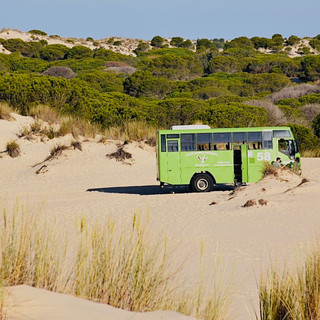
I'd open my eyes in time to see a group of red deer and then promptly ease back into depths of sleep. In moments of awareness, I'd look over at the kids who were in various states of trance-like behavior, save for Onora who was petrified of the rollercoaster ride and vacillated between silent screaming and all-out unconsciousness.
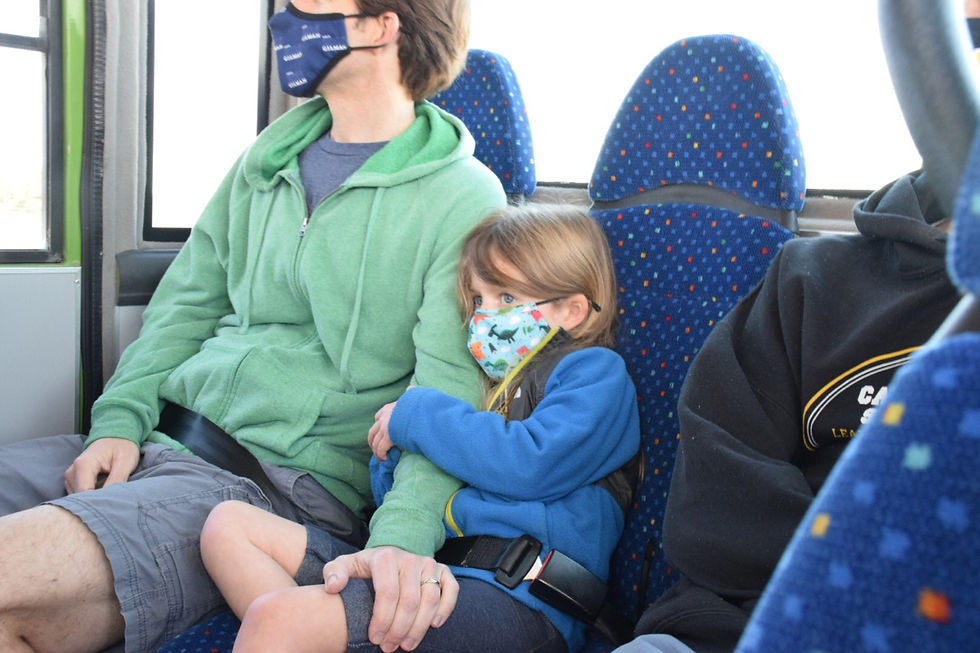
The promise of a glimpse of the rare Iberian Lynx was just enough of a carrot to keep slightly engaged and I offered 10 Euros to the first person who spotted one. No such luck. Every once in a while, the tour guide, who through no fault of his own, felt immensely guilty that we were on a tour in a language 5 of us didn't understand, tried to throw out a couple of English words here and there. And, in my slightly delirious state, when he said, "Mira!(Look!) Piglings," as he pointed to the boars and their babies, I spent the next 20 minutes giggling uncontrollably.
The tour picked up a bit as we hit the Gulf of Cádiz because when do you ever drive IN the water at 20 miles an hour on a bus? The bus created a rooster tail of water that sprayed up to the windows, prompting my children to throw them open in the freezing morning air, stick their heads out, and wave to the 50 or so clam fishermen waist-deep in 60-degree water, pulling and rocking what looks to be giant french fry baskets.
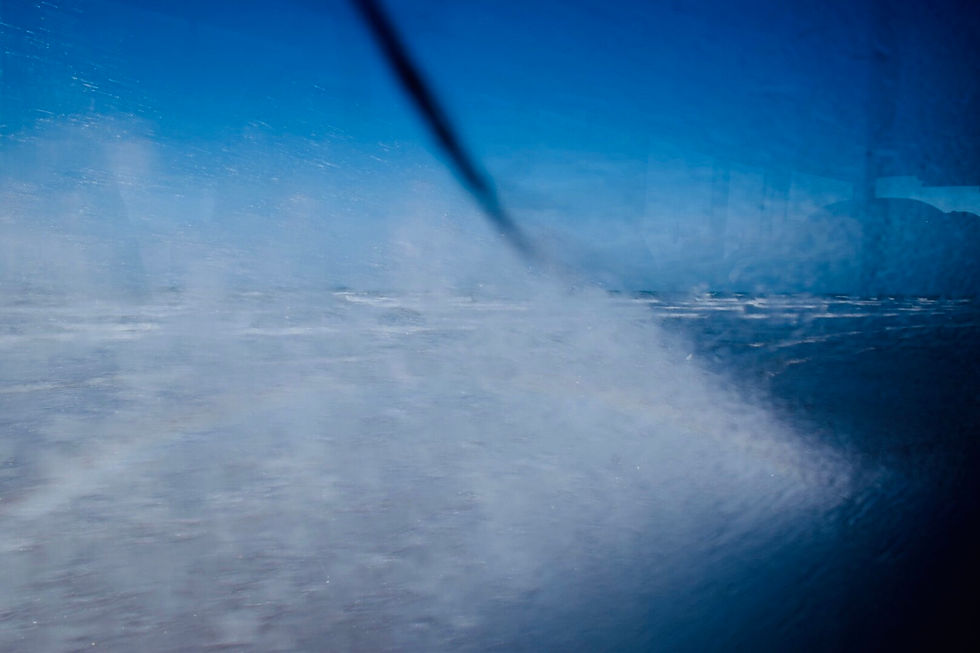

Coming full circle from the first part of the tour, Onora got her sea...err...bus legs and spent the latter part of the tour, laughing and bouncing in her seat.

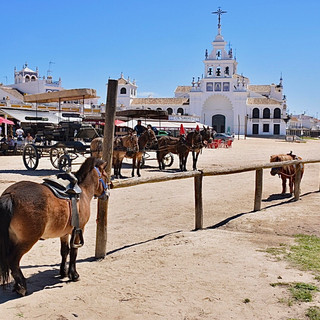
In El Rocío, we stopped for lunch. This little hermitage from the 13th Century draws approximately 2 million pilgrims on the second day of Pentecost. According to local legend, a shepherd found the likeness of the Virgin Mary carved in a tree. He removed it, planning to bring it to Almonte. However, he fell asleep en route and when he woke, the carving was gone. Miraculously, it had returned itself to its rightful place in El Rocío, which prompted the decision to build a hermitage in honor of the Virgin of El Rocío.
Imagine you've got a six-shooter and a nice set of spurs, you'd feel right at home here as you sidle up to your horse. El Rocío looks like an old western set at Universal Studios. However, this is authentic. There are streets to walk on but no sidewalks and no asphalt. Instead, it's all almond-colored sand filling in the spaces between the whitewashed buildings and flowered verandas. We sat at an outdoor table, dug our feet in the sand, and watched "traffic" go by. The traffic, what little there is, consists mainly of horses. And, instead of parking spots, there are hitching posts so your little pony doesn't up and walk off while you're in church.





Cádiz was calling us but we were all still unusually sleepy and we still had a 2-hour drive ahead of us. Thankfully, this wasn't straight out of National Lampoon's Vacation where the camera pans the car and finds everyone, including the driver, sleeping. Bless you, Kip. We pulled into old town Cádiz with as much fanfare as a bale of sedated turtles as we entered our apartment for the week. What looked about as cozy as a DMV from the main stairwell, the apartment itself was spacious, sunny, and newly renovated.
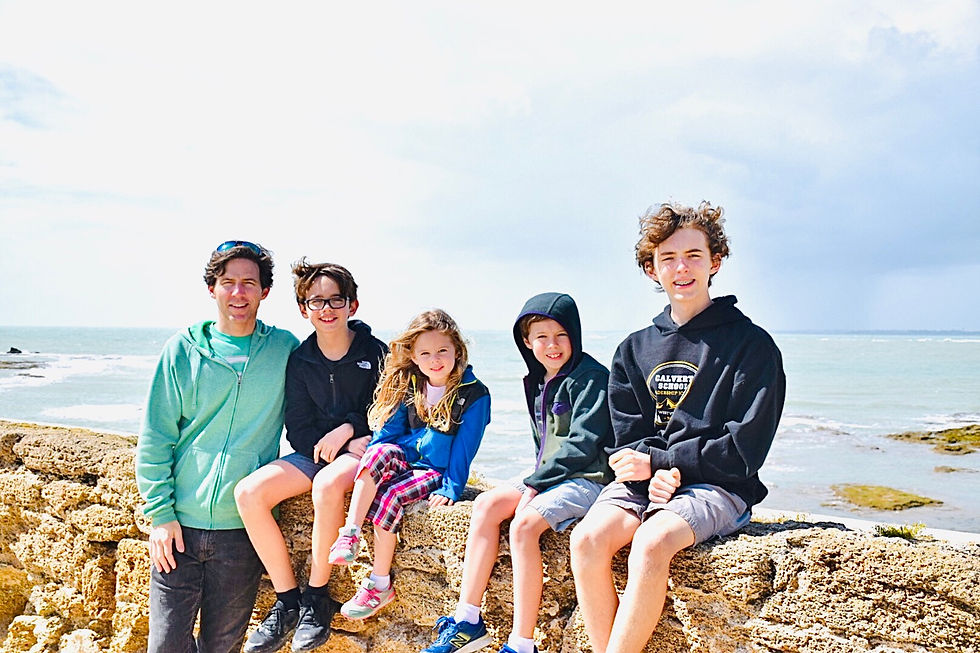
A little history of Cádiz: Founded in 1100 B.C.E by the Phoenicians and named "Gadir,” it is the oldest continually inhabited city in all of Europe. The city surrendered to Rome after the Second Punic War and Rome renamed the city "Gades." In the 5th century, the Visigoths destroyed the city but were quickly usurped by the Moors, who renamed the city, yet again, Jazirat Qādis. It remained under Moorish control from 711 to 1262. However, in 1262 the city was captured by Alfonso X of Castile and the name Cádiz finally stuck. In the intervening years, Cádiz, based on this optimal location was repeatedly under attack by the British, as they are wont to do. After the battle called the "Singeing of Spain's Beard" by Sir Francis Drake which left the Spanish Armada out of commission for a year, Cádiz had a decision to make: Build fortifications or relocate. The result of that decision has allowed Cádiz to successfully repel additional British attacks for the next 200 years.
As I walk the streets of Cádiz, I can't help but think of the line from Penguins of Madagascar, "Don't tell me where he has been. Tell me where he will have has been." You can write for days and days about the history of Cádiz but I want to know what's next for this city. There's a sense of a life well-lived here in past years but it feels a bit weathered and gritty; vibrance mixed with an underlying sense of sadness that I can't quite put my finger on. Paint peels off the walls from the wind and salt air, balconies with flowers that look a little worse for wear, and residential streets that seem virtually empty. The population of Cádiz is declining, with younger people opting for cities like Madrid. It’s like Cádiz worked on a large, country-wide group project but the louder, flashier cities took all the credit. And yet there is a sense of authenticity here that you don’t get in the more touristy towns. This city isn’t set up to entertain tourists. It’s set up for the residents to LIVE and that alone provides a charm that is hard to find elsewhere.


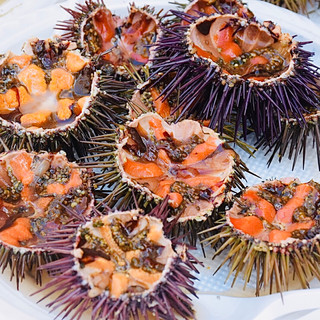
On my morning walks, fishermen wheel wagons loaded with fresh fish and sardines while vendors set up tables to sell plates of sea urchins, sliced ham leg, and baby shrimp in paper cones. This prompted Liam to write a miserably sad song about shrimp and I don't think shrimp will cross his lips anytime soon. You can follow your nose to the local fish market while waving to the locals who start their day or possibly finish their night shift at a bar with a beer or glass of sherry.



Our days in Cádiz were leisurely. The kids, after having 3 weeks without the ability to do schoolwork, felt more comfortable catching up on missing assignments and getting organized. I can't blame them though I'm not sure where their academic dedication came from. I guess we have Kip to thank for that. Excursions to the beach, walks to the park, and strolls along the castle fortress provided intermittent breaks and we had plenty of those.



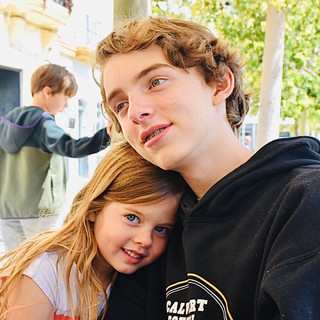

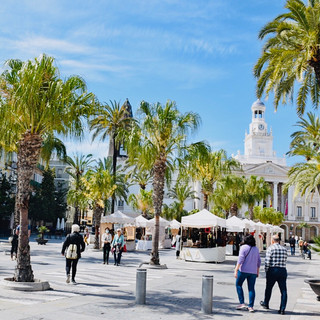

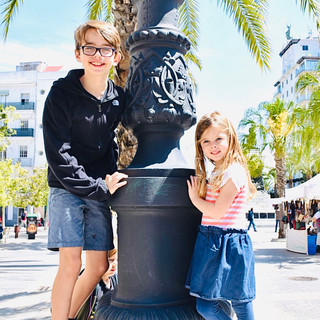
One such break was to enjoy a tapas and sherry crawl in the center of the old town. The kids were game for trying new things (well, not the sherry). Along the Calle de Virgen de los Palmas, we sampled sea anemone croquettes, shrimp croquettes (Not Liam), spinach and garbanzo stew, chicken breast in sherry sauce, plates of cheeses, and a variety of sherry for which this region is known.


At 11:00 pm, the kids were marching the streets like they owned the place and we were all having a ball.
And, in reality, it hadn't been dark all that long which got me wondering why Spain's time zone seems a little off, making it lighter later than most places of its longitude. Turns out that in a show of solidarity with Hitler, Francisco Franco, who could not offer much in the way of financial support after coming off his own Spanish civil war, offered to change Spain's time zone to match Germany's. Seems like an odd show of support. So, for the last 7 decades, Spain's time zone has been more in line with Germany and Poland rather than England, where it should be. Here's more information, if you're interested.

The taste of sherry was a little like drinking turpentine mixed with vinegar with a dash of sweet almonds. Needless to say weren't crazy about the stuff. Quinn remarked that it smelled like paint. However, we felt we needed to understand what the big deal was. This is the ONLY region in the WORLD that makes sherry so we were off to Jerez de la Frontera the next day to see the 12th Century Muslim Alcázar, have lunch, and do some sampling.

Jerez actually means "Sherry" so we were in the right place if we wanted to understand this Andalucian phenomenon. Here is more information if you're a Sherry historian (or would like to be). It's an interesting website:


Apparently, Fundador Bodega regularly exports their famous Harvey’s Bristol Cream to England because the Queen drinks it every day of her long life. And, for as much I could go the rest of my life without another drop of sherry, I‘d say the Queen is onto something with the Bristol Cream.


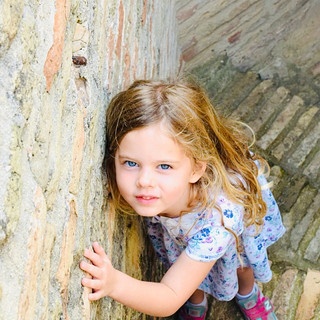


Back to Cádiz to soak up the last bits of wind whipped sun, we then said goodbye. We are pulling for this underdog city! Adiós y buena suerte!





Comments