

Hiding out in Ronda
- May 14, 2022
- 4 min read
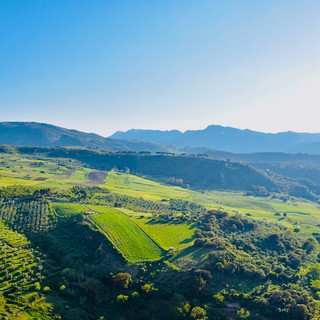
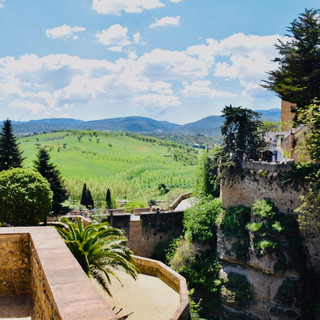
High atop the nearly 400 ft cliffs of El Tajo Gorge, Ronda perches precariously on the edge for an expansive view of the rural countryside beyond. There is something incredibly romantic about this setting due in part to the dramatic, eye-popping scenery but also because of the history of the area, placing it as one of the oldest cities in Spain. Ronda dates back to the 10th century B.C.E. and was first settled by the Celts, however, for many, the fascination with Ronda lies in its more recent past.

In the mid-19th Century, a handful of men, rather than face justice for their crimes, hid amongst the craggy rocks and caves near Ronda and the Serrania de Ronda mountains, turning to highway robbery and tobacco smuggling. One of the most famous of these bandits was El Tempranillo (The Early Bird). They say that El Tempranillo killed a man at the age of 13 to protect his family. Escaping the gallows, he ran for the hills, robbing passersby for food and necessities. However, he took a page from the legend of Robin Hood and not only was gallant toward the ladies and gentlemen he robbed but also generous toward the poor peasants around Ronda, sharing his spoils and thereby guaranteeing their silence. El Tempranillo famously said, "The King rules in Spain but I rule in the Sierra." These romanticized "Bandoleros" became so internationally famous that in the late 19th Century, tourism soared in the area in hopes of a confrontation with these romantic outlaws. Some tourists, particularly women, were disappointed if they were not "gallantly" robbed.

Ronda and Spain's most recognized and beloved bridge is the Puente Nuevo, completed in 1793 by architect José Martín de Aldehuela and built by Juan Antonio Díaz. It took 34 years to build this 322ft tall bridge that carries the Guadalevín River and divides Ronda's old and new sections. Above the central arch, is a doorway that was once used as a prison and torture chamber for political prisoners and bandits during the 1936-1939 civil war. Rumor has it, further perpetuated by Ernest Hemmingway's For Whom the Bell Tolls, that prisoners were gruesomely thrown into the chasm below.


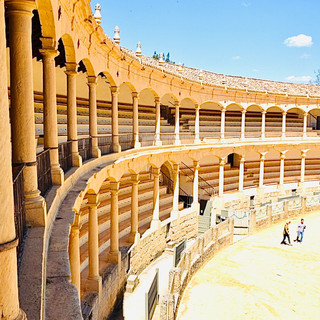
Considered the birthplace of bullfighting, with matadors such as Antonio Ordóñez and Don Pedro Romero, Ronda's bullfighting history is the stuff of legend. Romero is said to have killed 5,000 bulls in his illustrious career without a single scratch on himself. The Plaza de Toros is the oldest bullring (and largest in diameter) in Spain, built in 1784, and now also serves as a museum to preserve the history, the artistry, and the craft of bullfighting through an informative and exceptionally well-done audio guide. Only one matador has ever been killed in Ronda‘s bullring and he was buried in the ring on the exact spot of his death.




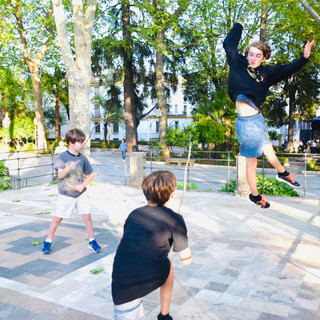
The kids took turns running like the wind to see if they could outrun an angry toro.
In the afternoon, we walked down stepped, stone pathways in order to visit the ruins of the Arab baths at the entrance to the old Moorish city in the 13th - 16th centuries. When visitors arrived in Ronda, they would cross the original bridge and then proceed to the baths to wash for spiritual and physical purification purposes.

Through a series of brilliantly engineered rooms, bathers would begin their purification process with the hot room. Placed nearest to the oven, the hot room is heated by an underground chamber under the flooring that pulls the heat directly from the oven.




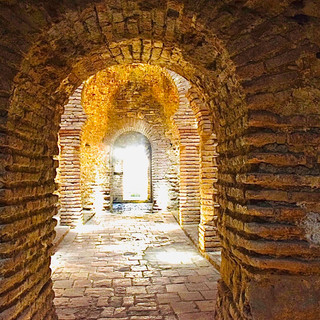
The steam is then created by the water brought to the baths from a water wheel. The bathers would then proceed to the warm room and finally the cold room, each room farther from the oven, before entering the city. Attached is the short video we watched at the baths. https://www.youtube.com/watch?v=zBk3ft26b5U&t=233s

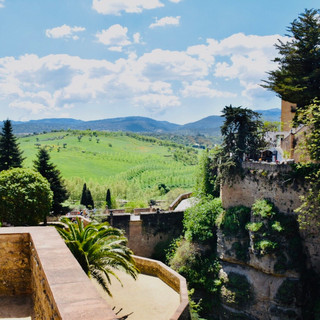


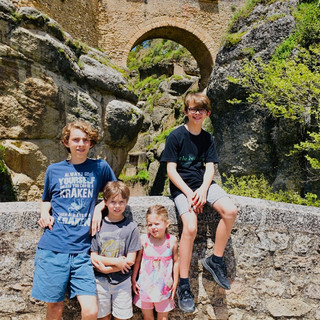

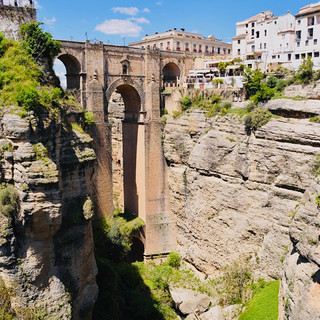
Like a group of mountain goats, we walked back up to the top of the town to explore the old whitewashed village and then back down to find the pathway to the base of the cliff on the other side of the city. One of my favorite children's books is Ferdinand about a docile bull from the countryside of Ronda who mistakenly gets selected for the bullfights in Madrid.

I first saw an image of Ronda from this perspective many years ago, thanks to Ferdinand, and was so happy to finally see it in real life.


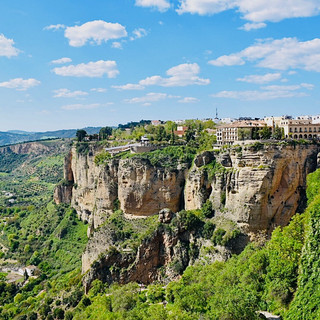


Though short, the hike back up was a bit of a climb and we found ourselves huffing and puffing in the blazing sun, discussing at length what our dream cold treat might be. Back in the quiet old section at the top, we settled on a six-pack of smoothies and enjoyed the resulting sugar rush.


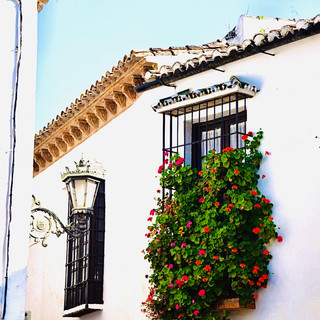


After a long day of walking, a take-out dinner and sunset in the park were just what we needed. The Alameda de Tajo park is one of a kind. You can't find a more spectacular sunset view than from the promenade here. Families gather for playdates, friends play guitars and sing, couples picnic with glasses of wine, and teenagers use it as their meet-up spot. Even church groups start practicing for next year's Semana Santa already!


Of course, my kids found a stone stage with a fence surrounding it and, like a boxing ring, used it for swordplay. Although Onora tired of this activity after a bit and instead set her sights on finding a new friend. She hunted through the park for kids her age and became quite the extrovert in the process. All the while, the sun went down over the mountains.



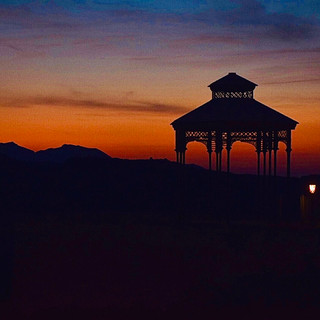


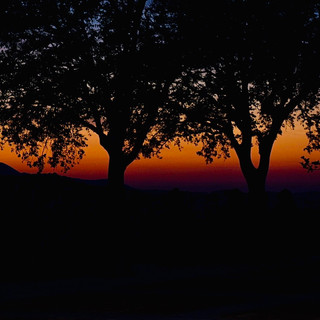
If I thought the magic of sunset was a sight to behold, when the sun goes down and the city lights come on, it takes your breath away. El Puente Nuevo shines.

We marched home…quite literally…and said farewell to Ronda.

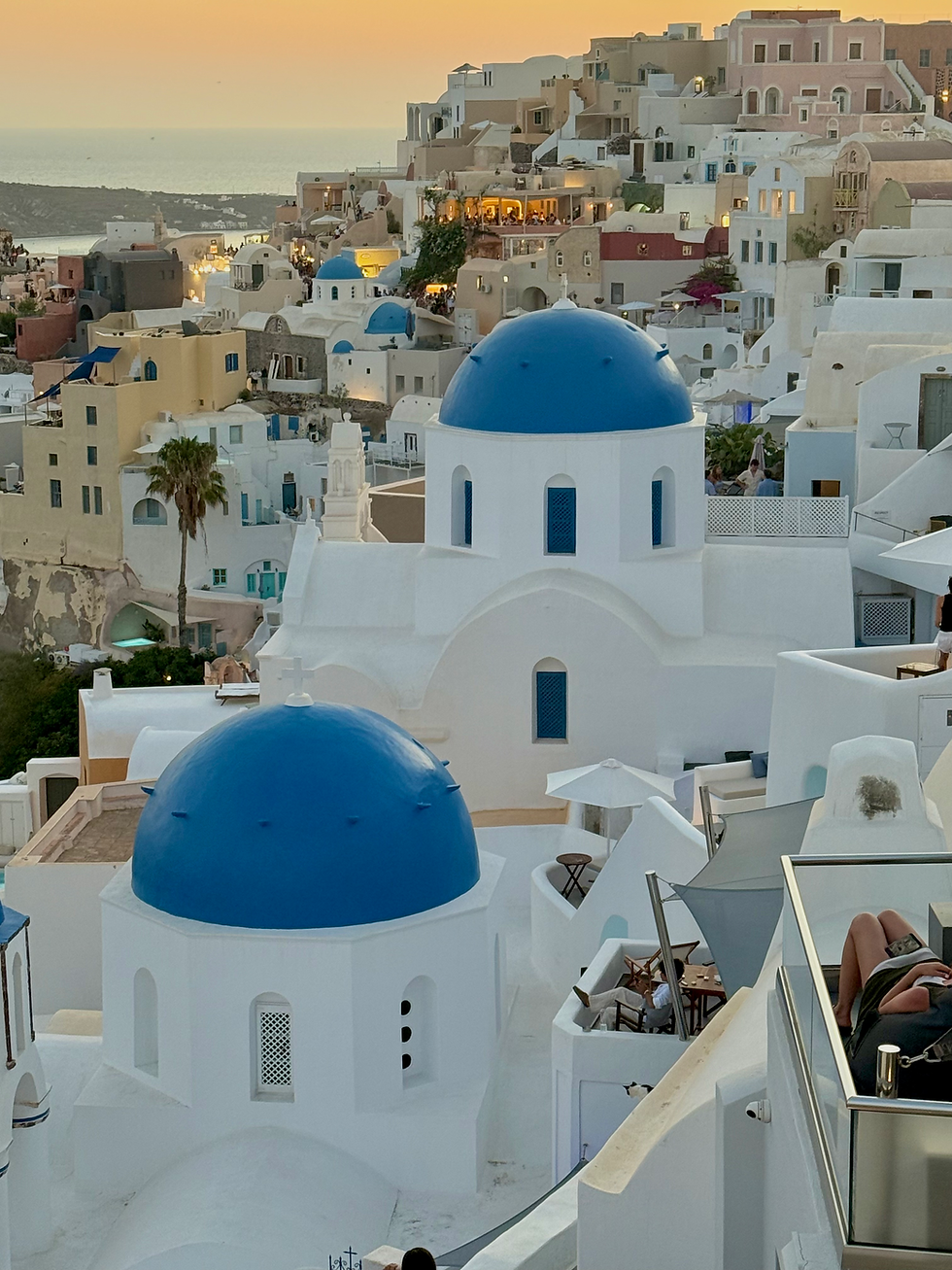

Ronda is magical. I went there with Gilman students in 2014 and loved the white-washed homes. I look forward to each of your travel entries, so beautifully written. Travel on!
That was a joy to watch!! It was so thoughtfully planned out and I loved the addition of the video interspersed with the photos. That sunset was glorious! I think I would love Ronda, the cute little town on the tippy top of a cliff!