

"Hakuba Matata" in the Japanese Alps
Updated: Aug 14
Take 2: I published the last post accidentally when plane turbulence made me mash the publish button.
What do Tokyo and Hakuba have in common? The obvious answer is that they’re both in Japan but that's about where the similarities end. Tokyo is motion, crowds, fashion, temples, shrines, scyscrapers, and neon.
After a busy four days, now might be a good time to slow down and let everyone catch their breath. To that end, we took a quick cab ride to Ueno Station, our now delapidated luggage trailing behind us. One of these suitcases, has seen better days after all of our travels. It gets the “Takes a lickin’ and keeps on tickin,” award. At this point, we’re fully expecting it to simply give up and vomit its contents onto the platform.
We picked up our tickets, with the help of Train Station Angel #2, and boarded the Shinkansen (bullet train). You know during those icebreaker games that make people groan and sweat simultaneously? Well, one of my ‘go to’ interesting facts about myself, other than the small ‘role’ I played in the movie, “The Shadow Conspiracy” with Charlie Sheen and Donald Sutherland….(Don’t worry, you didn’t miss much. It went straight to VHS, bypassing the theater altogether)…is that I took Japanese for three years in high school. While that isn’t fascinating in and of itself, those years from 1990-1993 were most likely considered the first online classes ever before it became so ubiquitous during COVID. Here’s a side trip down memory lane: I never stood in the same room as my teacher, Ms. Tilapaugh. Instead, her face was projected on a large TV that was rolled in on a cart by a nameless proctor. Maybe she was somewhere in Virginia, or maybe somewhere else entirely. I never thought to ask. She was simply a face. Of the 1,600 students at my school, only 7 of us took Japanese, crammed into essentially a dark coat closet. She’d call out to one of her many students across the county. “Amy from Godwin High School, please answer the next question.” On my desk was a old, corded, yellowed speaker with a big brown button, like a table top walkie talkie. I’d hold down the button and respond, “Hai, Sensei. Shinkansen,” giving her my answer. This is how I learned about the bullet train. Sadly, through those three years, I learned very little else, including the Japanese language. It was negative immersion honestly, but I did grow an appreciation for the elegant and artistic writing, and the culture. It only took me 33 years to get here.

There is no rocking motion on the Shinkansen. No click-clack of track. No jarring curves. While it’s not a mag-lev, it glides as smoothly as butter on hot toast. The leg room is spacious. You could comfortably lie down on the floor in front of your seats. But, there's no need, because your seat reclines to almost embarrasing angles; until I felt I might be in the person's lap behind me asking for a head massage.
On the 10:02 am Kagayaki express train, racing from Tokyo to Nagano at 200 mph, we cruised in style. 76 minutes and only one stop later, we pulled into Nagano and trekked the 10 minutes to the Alamo rental car when it suddenly hit me, "Hey, I'm not coated in sweat!" What a difference 1,088 feet in elevation make! After a quick crash course in Japanese road signs; particularly that the stop sign is a red triangle, instead of an octagon, we hopped in the car and adapted quickly to left side driving. {That's one of those sink or swim moments...You either do it successfully, or...you don't.) GPS became our new best friend as it guided us through the Japanese countryside into the mountainous Alps region near Hakuba.
I'd only ever heard of the Swiss Alps. However, in the late 19th Century, British missionary William Gowland coined the term "Japanese Alps" and the name stuck. To be fair, the Swiss Alps are significantly higher; the highest peak, Dufourspitze, measuring at 15,203 feet. By contrast, the highest peak in the Hakuba region is Mount Shirouma, standing tall at 9,619 feet. We parked ourselves in an uber simple, modern house named "Gravity" situated in a valley cocooned in fog and surrounded by white birch, japanese larch, beech and oak trees. Not a billboard in sight or a neon letter. Honestly, not even a person. This was a place to rest, rejuvenate, steep ourselves in nature, and just BE.


But, remember, it's us so we can't just BE for too long. The goal for the afternoon: Riding high on the Adam Gondola to make it to the top of Hakuba Happo-One Ski Resort before the weather turned from cloudy to thunderstorming.


Onora did an Oscar worthy performance acting as if she was 'perfectly and completely fine.' But behind her beautiful smile, there were the tell tale signs of her terror: Glistening eyes and the koala tight grip she had on Liam's arm for the duration of the 10 minute ride.

Just off the gondola, Onora flexed her fingers, loosening her hold. A clearing opened up complete with a cafe, picnic area, and a smattering of food trucks (how did they get those there?) that wafted delicious smells through the fog that now hung at the top of the mountain. Hunger won out over our desire to see the view so we perused the menus. Curry? Soba noodles? Ice cream? Sounds delicious! We all chose the soba noodles, unaware that they would arrive cold and with a broth of floating teenage shrimp. Kip quipped, "Maybe next time we shouldn't all order the same thing?" Onora was the only one who deviated and therefore won the day with her plain noodles - teen shrimp sleeping peacefully on the side. Picking exoskeleton from my teeth, I washed my shells down with a cold brew from the mountain resort that was clearly trying to save money on design packaging.
Fun fact: Did you know that shrimp shells, also known at chitin, are used to make biodegradable packaging and medical bandages?

We zig-zagged through a grove of trees to the far side of the mountain, coming to a cafe with a terraced viewpoint and a glass wall that blended seamlessly with the view laid out in front of us. The cloud cover obscured what might have been a view of the dramatic and towering peaks of Mount Shirouma, Mount Hakuba-Yari, and Mount Shakushi (the peaks that make up the Japanese Alps). On the clearest of days, you can see 100 miles away.

Here we took advantage of the lovely lighting for our own mini-mountain photo shoot and had a few cookies at the cafe as a necessary palate cleanser.

Ok, so we had a little fun at Onora's expense on the way back down the gondola, absolutely exploiting her fear. Isn't that what good mothers do? No? It seems that by pretending we were all terrified and getting her in on the acting game herself, it took some of the power out of her own nerves. Once she could see how silly and fun we were making it, she was able to let go of her fear and laugh a little.


See! She's not scarred at all. Look at her chatting it up and continuing her role play.
That afternoon we did what we could not do in Tokyo. Simply sat. I brewed cups of tea and wrote about Tokyo while the kids played cards, read, and composed poetry. In between bouts of langurous lazing, Liam spent a few hours teaching Onora the choreography to a Stray Kids K-pop dance.
As the sky grew dark, sustenance was necessary and we took that opportunity to head into the 'town' of Echoland, a quiet little village offshoot of Hakuba. It's clear that this town is bustling...in winter. Its wealth shows in its modern ski chalets, Olympic size ski jumps shining like a beacon from the side of the mountain, and a variety of trendy restaurants that cater to an international crowd. Interestingly, in August, most everything was closed by 7pm, if it was ever open at all this time of year. As we snaked through town, we noticed there were no street lamps to guide us; the only light coming from the headlights of our car and the interior GPS screen. We pulled up to a deserted parking lot situated adjacent to a traditional Japanese graveyard, each of us shivering a little and wondering, "Where the heck is everyone?" This took "ghost town" to another level.

Glowing orange in the darkness, a barely legible small neon sign read, "Bar Refuel". You could almost hear the buzzing from the elecricity against the backdrop of silence. Ah, the first sign of life. Down a set of steps we opened a door to a warmly lit cozy bar filled with a mishmash of plush couches, oversized coffee tables, and surfing paraphanalia on the walls. Like a scene from a eerie thriller, the place seemed to hush as we walked inside, even though we were the only ones there...aside from one lonely guy at the bar, nursing his draft beer. I imagined him turning around to reveal a slow toothy grin and a southern drawl, "Well, ya'll ain't from around here, are ya?" And, then I shook my head and remembered I'm in Japan, not in a Deliverance sequel. A friendly, young Aussie/Japanese waitress took our orders and we settled in for a bit.

Coming upon this place was like walking through a barren desert, finding the only watering hole for miles only to discover it's filled nectar from the gods rather than some muddy sludge. Case in point: Superior bacon and avocado smash burgers, perfectly seasoned fries, and homemade lemonade made with ginger and honey completely resets your baseline for comfort food. The background music boosted our spirits while a large screen projected wild surfing videos and the ocassional gruesome injury.
We drove home in the dark, our hackles up in the night air, and passed what Gaelan dubbed The Skinny Wendicorn - a hybrid of the unicorn and a wendigo (a mythological, cannibal monster who hunts at night through forested areas). Thanks, Gaelan! We were more than ready to get inside and pull the shades on our large windows.

The following morning brought us Gondola ride number 2...and 3, and 4. It's a good thing Onora got over the nerves yesterday...sort of. We were in for a 20 minute climb up the mountain, changing from gondola to open air ski lift as we ascended by degrees.
Now, let's be clear here. This was no daredevil ride. During most of the trip up the mountain, our shoes grazed the grasses, swinging back and forth, making a satisfying swishing sound through the stalks, hacking at them like some dull weed wacker. If you fell from the lift, the worst that would happen is you might get a rash from the plant life.

Once you exit the last gondola, a small outpost of last minute items to purchase including trinkets and souvenirs sits quietly in the fog.


The clouds thicken and you start the climb up the rocky path toward the summit. It's a mile long with 755 feet of elevation gain. We've hiked longer trails than this one, for sure. However, while a clear view usually provides a distraction from just putting one foot in front of another, this hike was void of visuals. Yet, today the distraction comes from the tinkling bells on backpacks. In the dense cloud cover, you hear the bells long before you see anyone coming.

In the modern world, these bells are meant to warn the shy Asiatic Black Bear of your presence, thereby avoiding a surprise encounter. But this practice of wearing bells is as old as Japan itself. In Shinto tradition, the sound of a clear bell is said to purify the air and ward off bad spirits. In addition to the sound of the bells, every hiker along the route calls out, "Konnichiwa." With so many people on the trail, most of which you couldn't see, an echoing chorus of "Konnichiwas" rings through the air, harmonizing with the bells strapped to their packs.
At some point we came to a fork in the road. We chose the one less traveled. While everyone else took the boardwalk path up, we opted for the more challenging Ridgeline rock scrambling method.


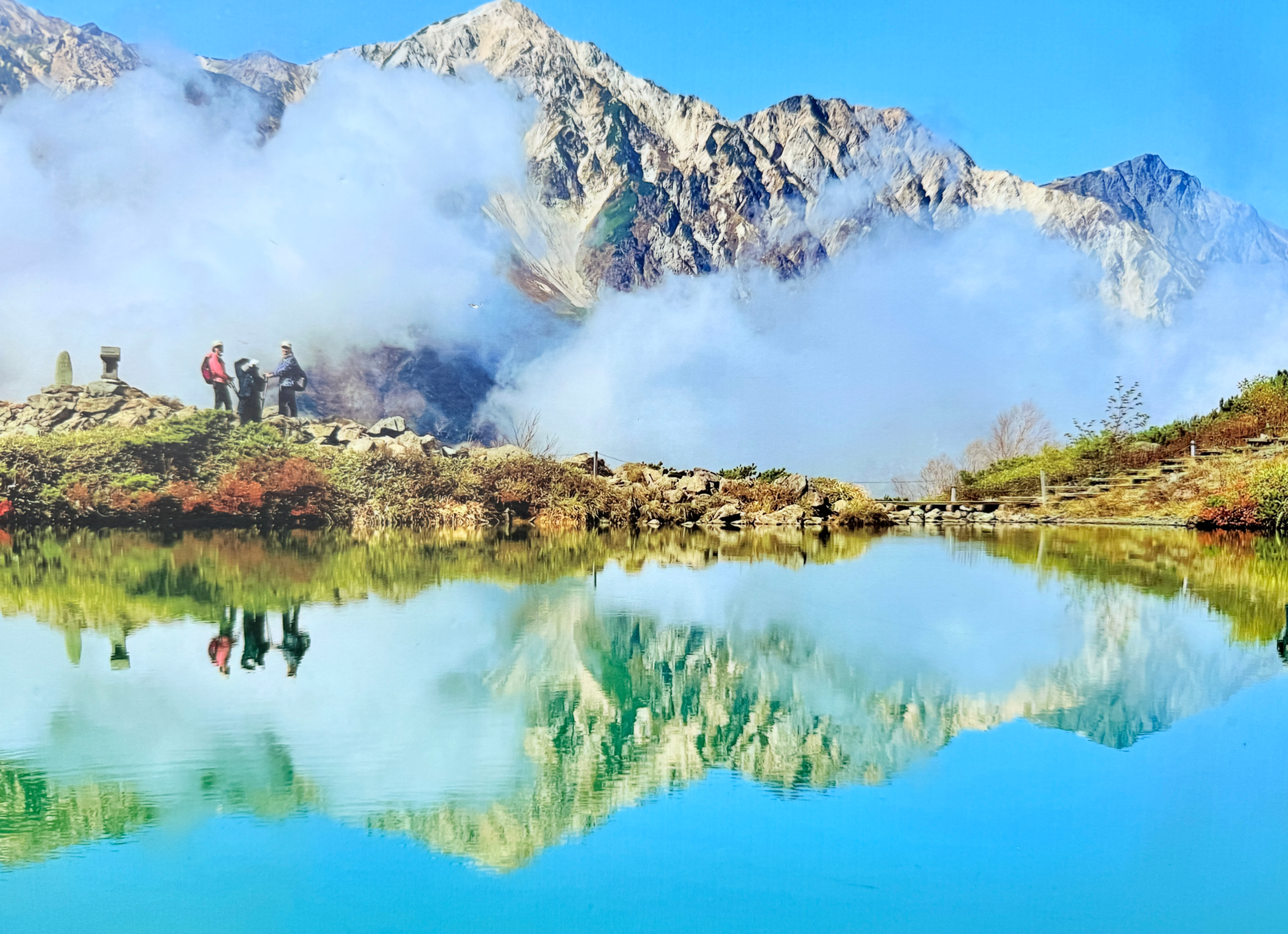
Our destination: Happo Pond. At 6,700 feet, the pond at the summit is an extremely rare geological anomaly caused by naturally shifting snow that, over time, disperses mountain debris. It took centuries for these shifts to create a hollow on the ridgeline. There are no streams that feed it and the water comes solely from fresh rainwater and melting alpine snow.
On a clear day, the pond behaves like a giant mirror, reflecting the 9,800 ft peaks of the Hakuba Sanzan mountains. The effect is so mesmerizing that, apparently, it looks as if the mountain is floating before you. This was not our experience. Here is a photo of what we saw.

This is what it COULD look like....Yeah...so....At least it wasn't hot?
This was not a casual stroll, whether you do the Advanced section or not. So, what was so remarkable was the number of elderly Japanese taking this hike on. Slow, steady and methodical. At the top, a man approximately in his 80's sat on a rock overlooking the pond and, in a sing-song voice, recited meditatively to himself from a series of cards on his lap that he shuffled through.
On the way down, my knees needed a serious rest from the banging and jumping off rocks and I was glad to be back to the house before heading back to, you guess it, Bar Refuel for dinner. Now the only regulars at the place, we got "the usual," waved goodbye to the Skinny Wendicorn and the graveyard, packed and were ready to leave in the morning for the Tateyama Kurobe Alpine Route in the morning.
This route quite creatively allows you to literally forward you car around the mountains with a professional driver while you go right on through the mountain itself. The Alpine Route takes you directly through the peaks by a series transportation: electric bus, gondola, ropeway, cable car and greyhound equivalent, pausing at 5 different scenic lookouts along the way.
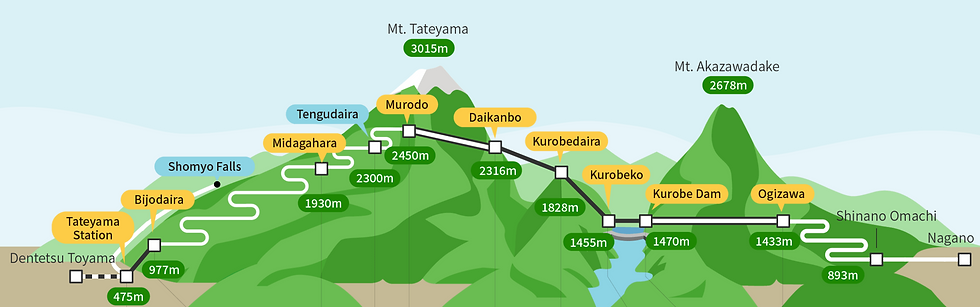
We boarded the bus at Ogizawa and made our way directly through Mt. Akazawadake, deep beneath the surface.
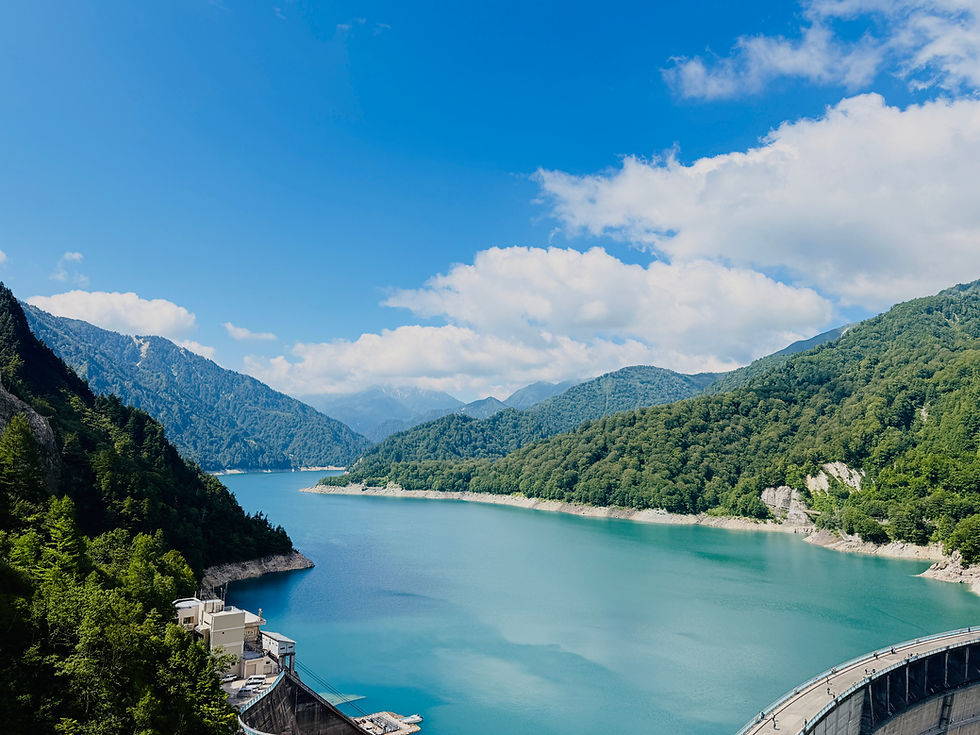
Juding by the look of the day, I didn't have much hope for a view. But, when we disembarked at Kurobe Dam and ascended the long staircase, a magical sight appeared. Bright, brilliant sun!

This route wasn't originally intended for tourism. In fact, after World War II, Japan was industrializing at such a rapid pace that they needed electricity. Hoping to exploit the Kurobe River for its enormous hydroelectric potential, they had to devise ingenious ways to cross the mountains and build a dam. The problem was that the mountains were extraordinarily steep and inaccessible. Getting workers, equipment and materials into the Kurobe Valley was a monumental engineering challenge. Only a year into the construction, the formerly labeled "Project of the Century" was promptly changed to "Accident of the Century" when a massive flood in the tunnel took the lives of 171 workers. The end result? The Kurobe Dam is Japan's highest dam and discharges approximately 864,000 to 1,296,000 tons of water per day, producing enough electricity to power 250,000 to 330,000 average households a year. The dam itself took 7 years to build while the entire route took 20!
In 1971, the route opened and, surprise surprise, tourists flocked to it whether for an engineering pilgrimage or a scenic one, or a little of both.

The feats of engineering that went into this route are truly remarkable. We were traveling through the remains of one of Japan’s most ambitious engineering projects. Every tunnel, cable car, bus ride, and precarious passage through the mountains seemed to tell the same story: That someone looked at these enormous peaks and decided, "Yeah, we're going to go through them."
There’s something awe-inspiring about realizing that the infrastructure carrying us through this landscape was once built out of necessity, under incredibly difficult and dangerous conditions. It shows what human effort and ingenuity can produce.

Crossing the dam on foot, we followed a tunnel and boarded a cable car that took us up a steep slope that bores through the center of the mountain before dropping us off at another look out point above the dam.
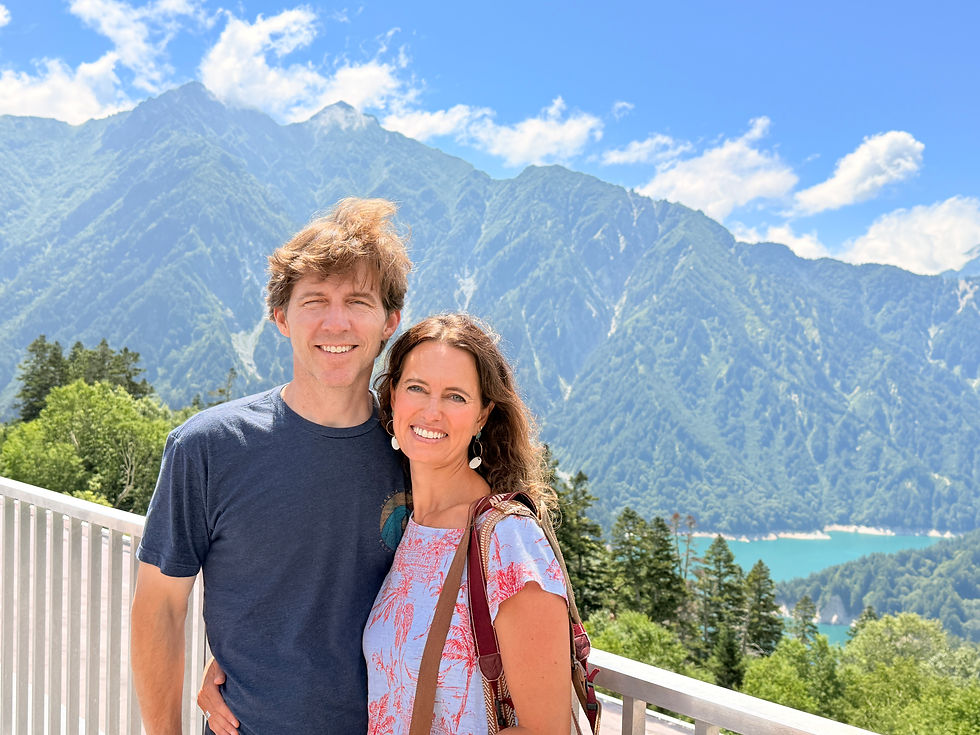

Next up, Mambo #5! Wait, I mean Gondola #5. Onora was becoming a pro at this 'travel by suspension' thing. We followed the Alpine Route for 4 hours, higher and higher until we came to our highest point at Mt. Tateyama.

Here we are at the final lookout on the Alpine Route. Nearby, Jigokudani aptly named the “Valley of Hell” emits gases from underground, due to the volcanic activity in this part of Japan. The smell of sulphur from the underground gases permeated the air around the lookout view. Beyond the smell, the landscape opened up to a broad stretch of land surrounded by mountains on all sides. Small, pristine blue lakes dot the greenery, cobblestone paths meander, and helicopters trailing long lines and baskets ran supplies to a lodge at the tippy top of Mt. Tateyama, also known as “The Roof of Japan”...It reminded me a little of Mt. Crumpet where The Grinch holes up but, less cave...more mansion. I'd love to see the inside of that place!


From there, we took a luxury style bus with large panoramic windows along a section of the route called Nanamagari or "Seven Curves." The bus navigated the twisting mountainside between the Murodo volcanic plateau to the lower primeval forests of Bijodaira where 1,000 year old cedar still stand tall. In the spring, this part of the tour is most famously known for the “Tateyama Snow Corridor” where heavy plow equipment carves out feet of accumulated winter drift to access the road. By early spring, the walls on either side of the road have reached approximately 65 feet before they start melting!

On our way down, we passed Japan's tallest waterfall, Shomyo Falls, where I could only afford a quick glance over my right shoulder. With my motion sickness, you can be sure I was counting those curves, breathing a sigh of relief when I'd tallied the last of them. Finally, we boarded the final cable car descending into Tateyama Station. Because it runs on such steep tracks, the car is designed to accommodate the 24 degree decline by creating tiered seating.

We rolled down into Tateyama Station and found a local restaurant in Tateyama square that served delicious curry and ramen. A quick pit stop for ice cream and coffee at Coffee and Bed, gave us the much-needed jolt for the 1.5 hour drive ahead.
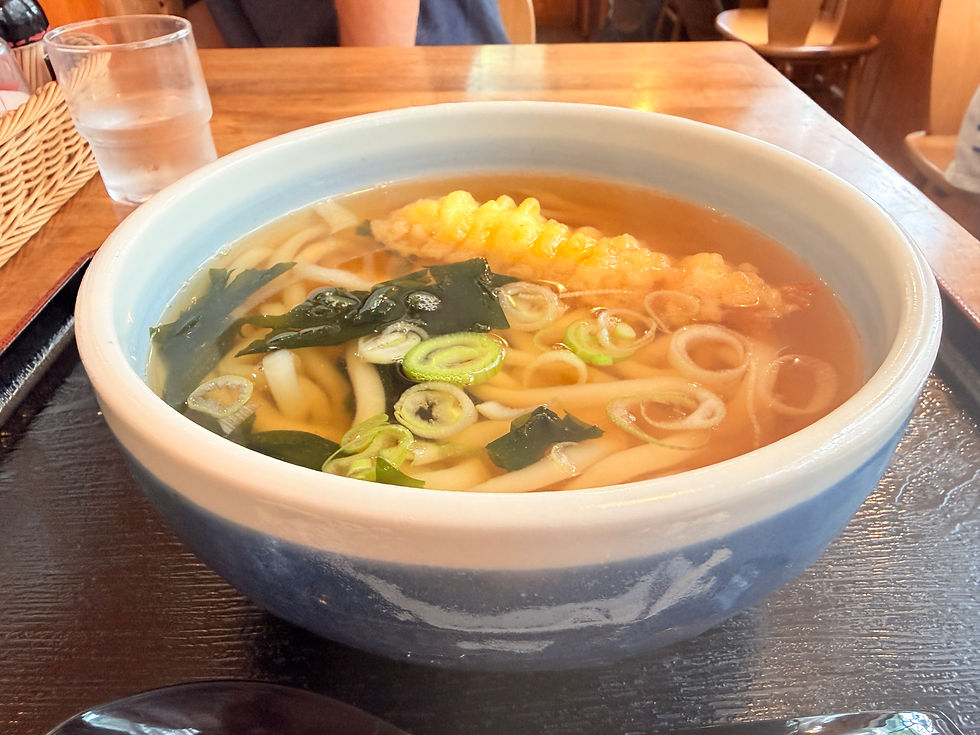
We picked up our safely forwarded car, and hit the road, bound for Kanazawa. Kanazawa is known as "Little Kyoto," and is celebrated for its samurai, traditional arts and crafts, gold leaf, as well as its foodie scene. Interestingly, it is one of the few major Japanese cities that came out completely unscathed after World War II. Its historic section was left completely intact. So, we are going to step back in time and see traditional Japan.


Such a beautiful description of the Japanese Alps. I went to a fall matsuri up there many years ago with a friend we met on by happenstance on the plane! He wanted to show us his hometown.
. It is quite hard to believe that Tokyo and this rustic area are in the same country. Thank you for your gorgeous descriptions and pictures which are both drawing me into your journey and reminding me of our travels there.